
It is interesting to me how often musicians I meet mistake the ability to read chord charts and play pop-style music as an understanding of music theory. The insinuation is often that classically trained musicians have no understanding of theory, whereas pop musicians know only theory. The thing is, these kinds of assertions reveal a deep misunderstanding of what music theory is. Music theory is not simply knowing how to play chords. It is also not limited to one kind of style. So, if that’s not music theory… then what is?
Music theory… an attempt at definition
Essentially, music theory is the study of how music works. Why do certain note combinations sound better than others? How do we put melody, harmony, and rhythm together in a way that is pleasing to listen to? How do we write music down in order to share it with others? A musician who has a solid understanding of music theory will be able to understand how music works. If you can read chord charts, but you don’t understand why that chord progression fits, or how it supports the melody you are singing, then you really don’t have a good understanding of theory… even if you can play any chord placed in front of you. The two are not synonymous. In fact, a person who has a classical background, but can identify the chord structure within the piece they are reading and explain why it works actually does have a good understanding of theory, even if they’ve never read through a single chord chart in their life.
The reason many classical musicians are considered to have a poorer understanding of theory is that they are often not taught these things. Pop musicians, on the other hand, are more likely to have been trained in at least harmonization theory. That said, a classical musician who has been properly taught will actually have a greater understanding of theory, because classical training allows for a more all-encompassing approach–if the instructor coaches the student in all aspects of musical theory and training.
So then, what are the aspects of music theory? What do you need to study in order to become well-rounded in your music theory understanding? Let’s get into it:
Notation and reading
Fun fact: reading music is actually part of understanding theory. What? Yes, that’s right! Notation (or music written down on the page) is actually an essential aspect of music theory. If you cannot read music in notation, you will be unable to decipher a vast percentage of the music available to you. Beyond that, notation actually helps the musician gain understanding of how music works. How? When you learn to read music, you have to learn note letter names, rhythmic values, and key signatures. Further, you have to practice all these things with great precision. As you learn these things, you learn how music functions. You learn scales, arpeggios, and keys which help you to understand how different note combinations sound. You not only learn rhythm, you learn to understand how it breaks down, and you gain an ability to recreate it. You learn how to play dynamics and articulations, and innumerable other things that greatly aid in your ability to play not only precisely, but musically.
Harmonization
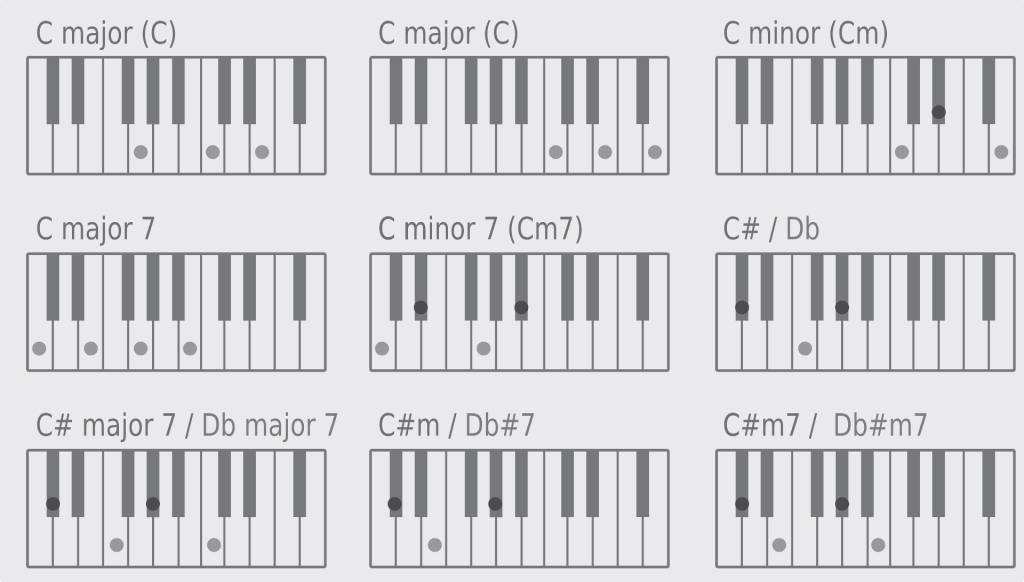
Harmonization is the aspect of music theory that most people generally think of. It is chord structure and progression–in other words, it is what you learn when you learn to play off chord charts, provided you are actually being taught how those chords work together. Learning how to harmonize and how harmonization relates to the melody notes enables you to understand how notes go together, how certain note combinations will sound, and how songs are generally structured. This allows for greater mobility as a musician, giving you the tools to figure out songs by ear, transpose easily, and create new harmonizations for existing melodies.
Musical structure
Musical structures is yet another aspect of theory. Structure helps us to categorize pieces of music and balance sets of repetition in a harmonious way. Listeners like to hear melodies they are familiar with, and when we strategically place new material among familiar material, it creates a greater likelihood that the piece to stick in the listener’s memory. Additionally, learning musical structure helps with performance. Different styles of music tend to favor different musical structures, and there are often assumed musical aspects that go along with the structure. When a music student learns to divide up their music in this way, it helps them orient their minds to the piece and play it according to the style in which it was written.
There are, of course, even more aspects of music theory, but I hope you have at least started on your way to gaining a greater understanding of it. Theory is a key aspect to becoming a well-rounded musician–the more you study these things, the more you will come to fully understand music and be able to play it with ease. If you are a musician, I hope you will take it upon yourself to learn more!
 preludemusicnh.com
Leave a comment